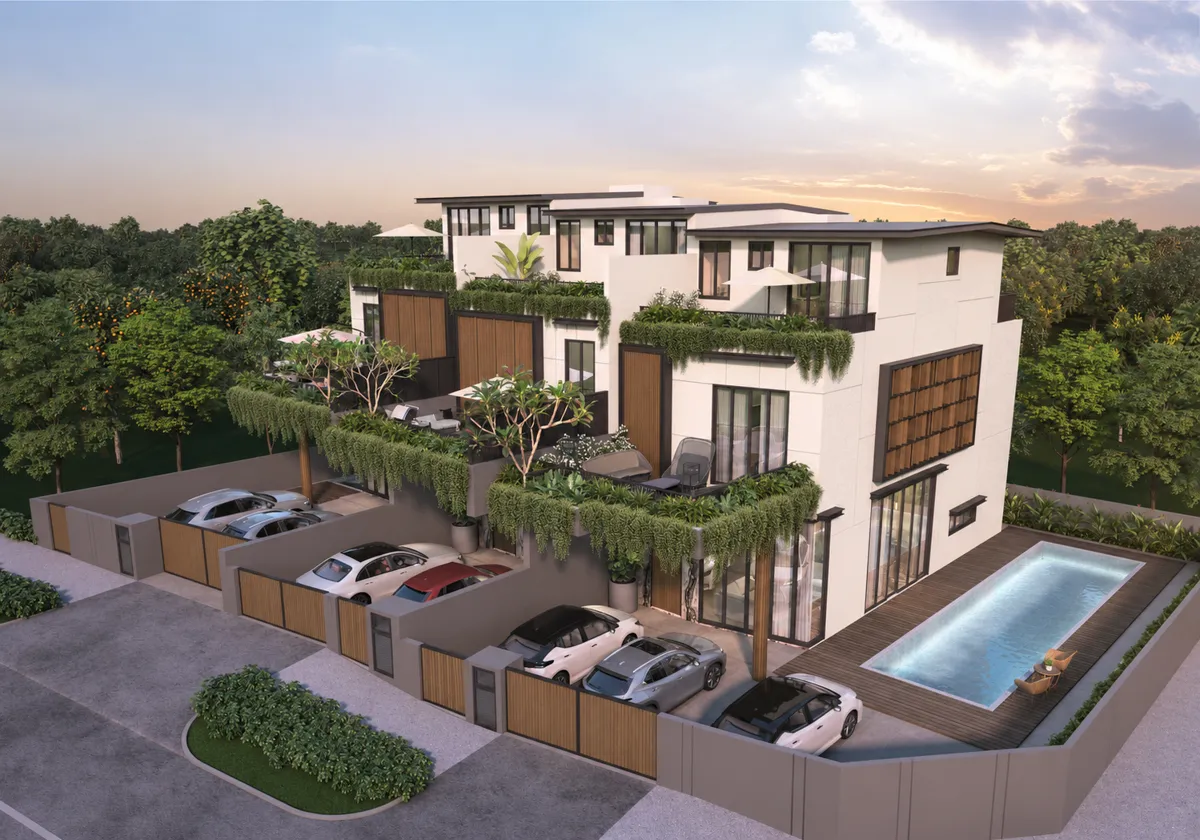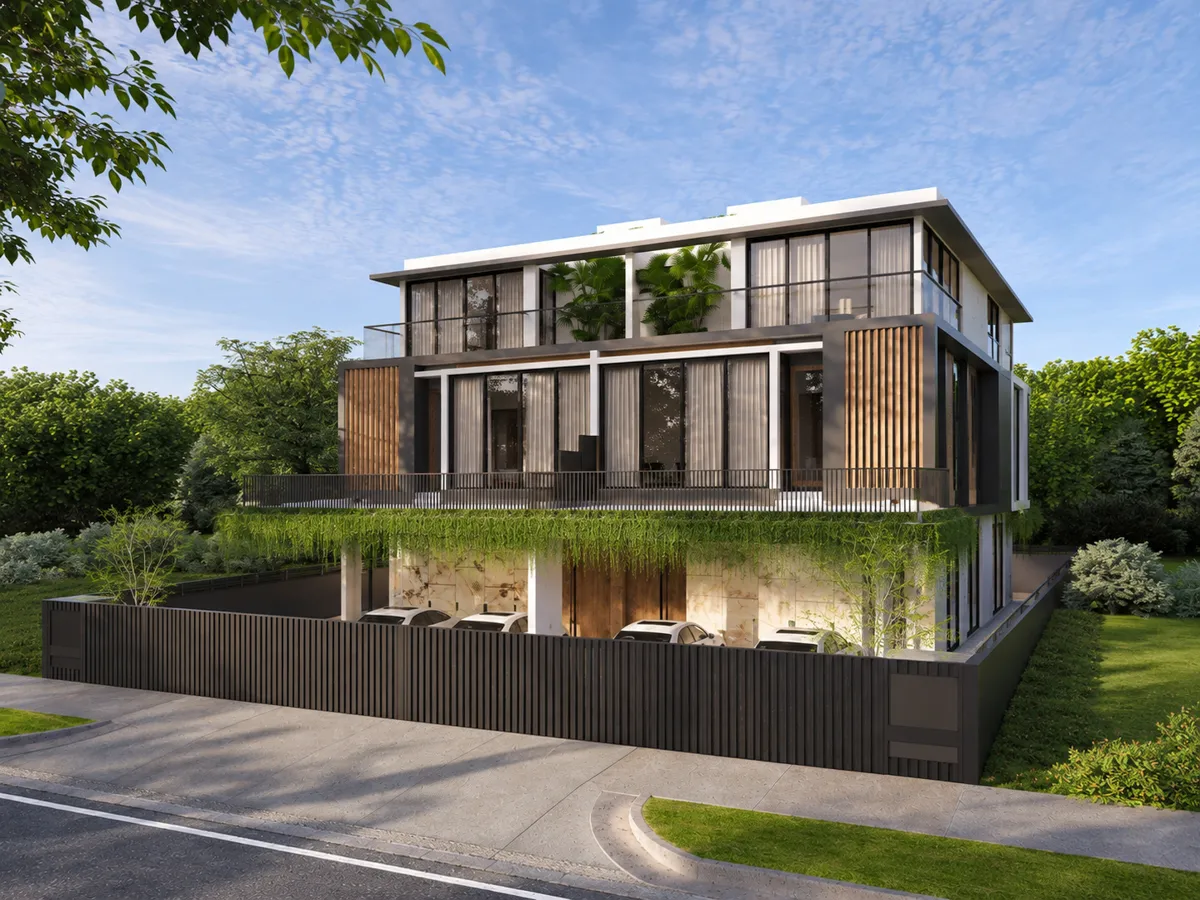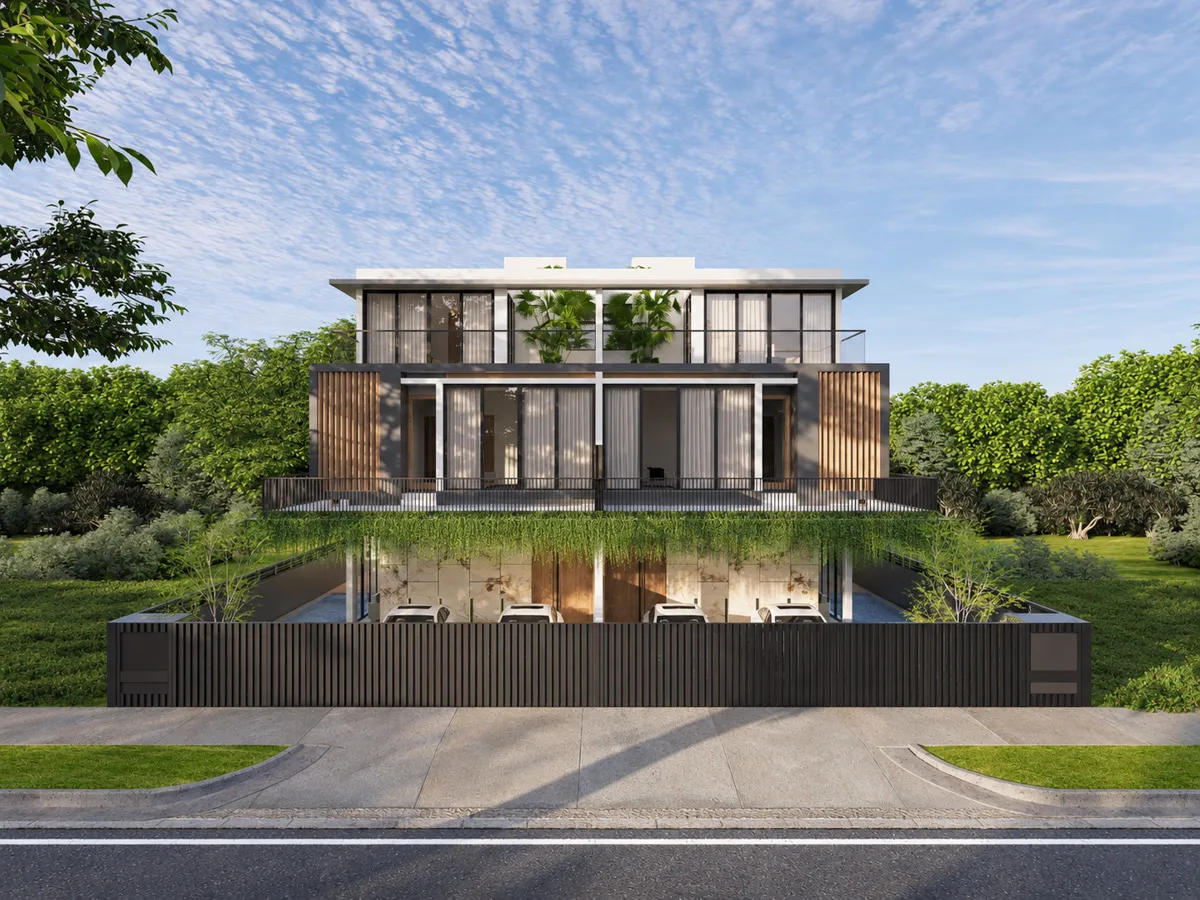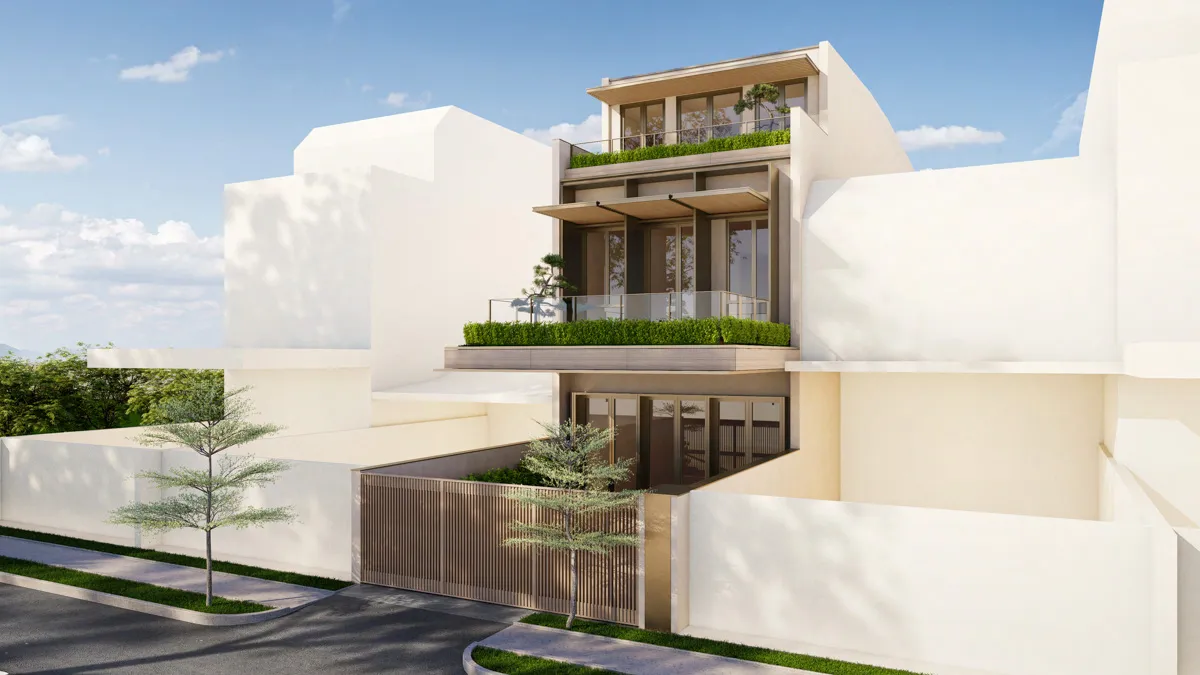


Two landed homes may sit along the same street, yet offer vastly different possibilities. One may have the potential for a complete transformation, while another may face limitations despite having a larger land area.
In Singapore, the type of landed property you own matters just as much as the land itself. From inter-terrace and corner terrace houses to semi-detached homes, bungalows and Good Class Bungalows (GCBs), each comes with its own characteristics and planning requirements.
So what exactly sets them apart?
We break down the different types of landed properties in Singapore, including their minimum plot sizes, widths and key differences, based on the Urban Redevelopment Authority's (URA) Development Control Guidelines.
Types of Landed Properties in Singapore at a Glance
The following table summarises URA's minimum plot requirements for the main landed housing categories.
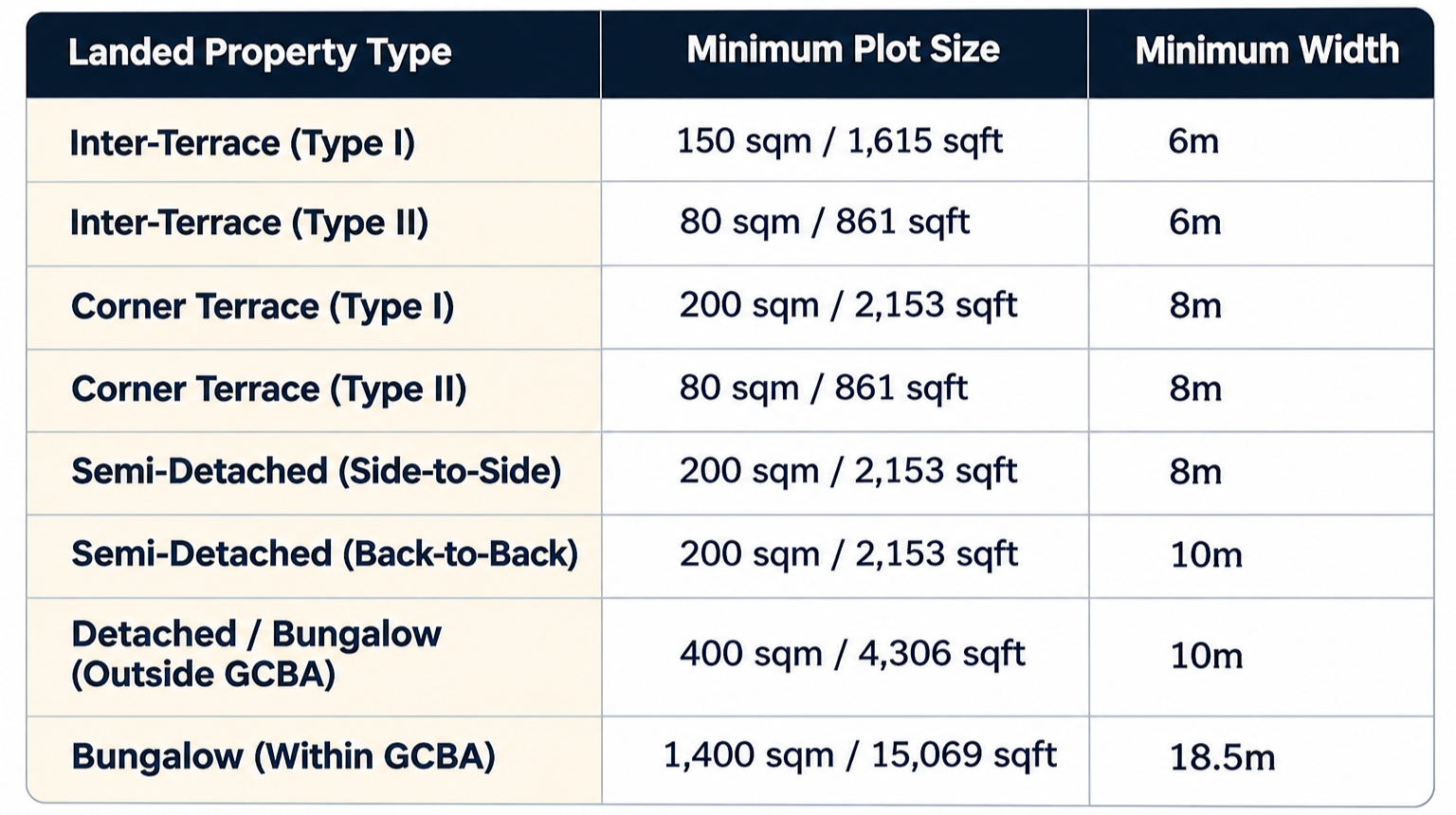
Source: URA Development Control Guidelines, updated 6 November 2026. Square footage figures are approximate. Bungalows within GCBAs also require a minimum plot depth of 30m. Requirements apply to proposed developments and are subject to applicable planning controls and exceptions.
1. Inter-Terrace Houses
An inter-terrace house is located between two neighbouring houses within a continuous row of terrace houses. It shares party walls on both sides, with open space typically available at the front and rear.
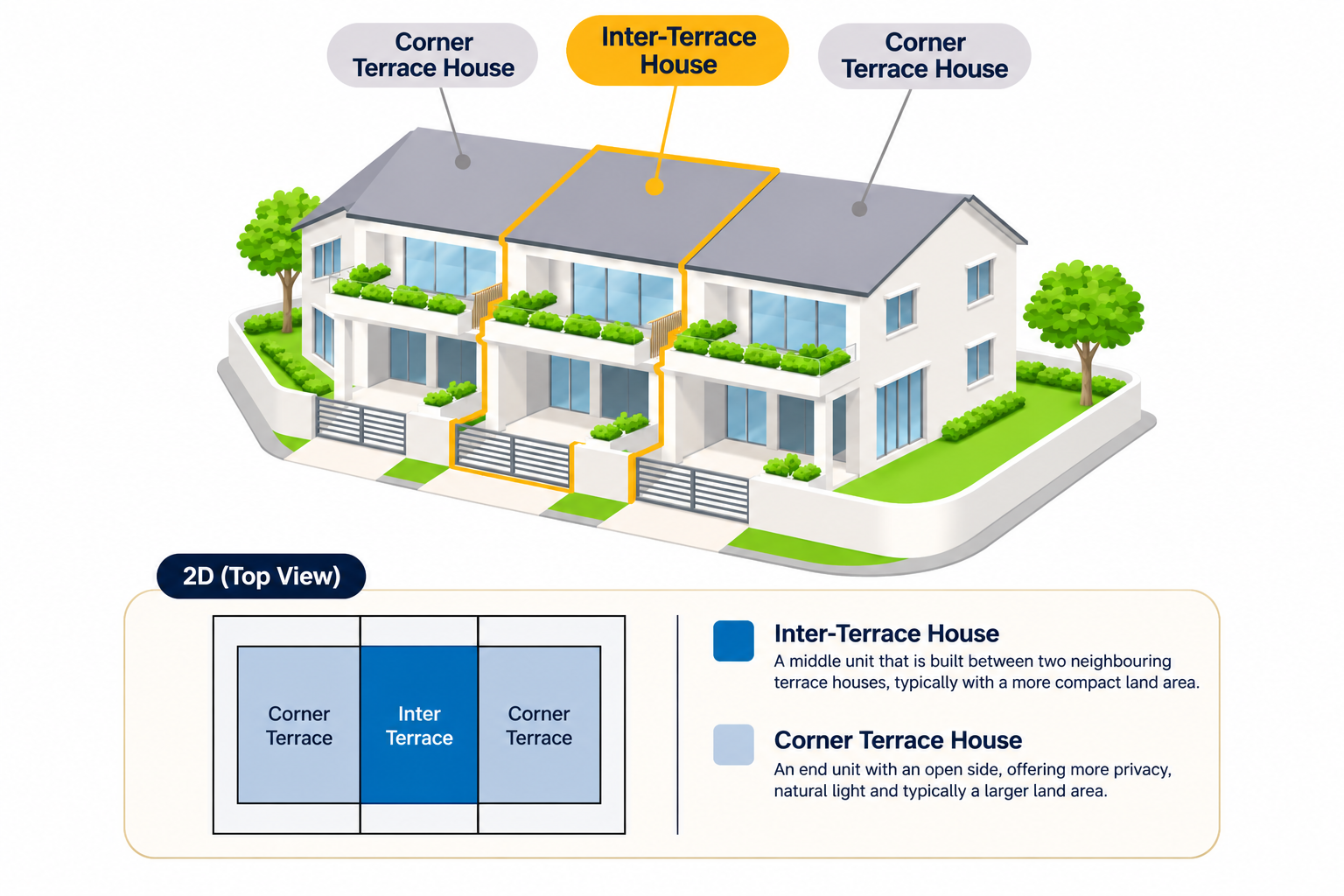
Alt Text: Illustration showing an inter-terrace house positioned between neighbouring terrace houses in Singapore.
Under the Urban Redevelopment Authority's (URA) planning guidelines, terrace houses are classified into Terrace Type I and Terrace Type II, each with different minimum plot size requirements.
These classifications apply to both inter-terrace and corner terrace houses, with the applicable category determined by the planning controls governing the site.
URA Minimum Plot Requirements
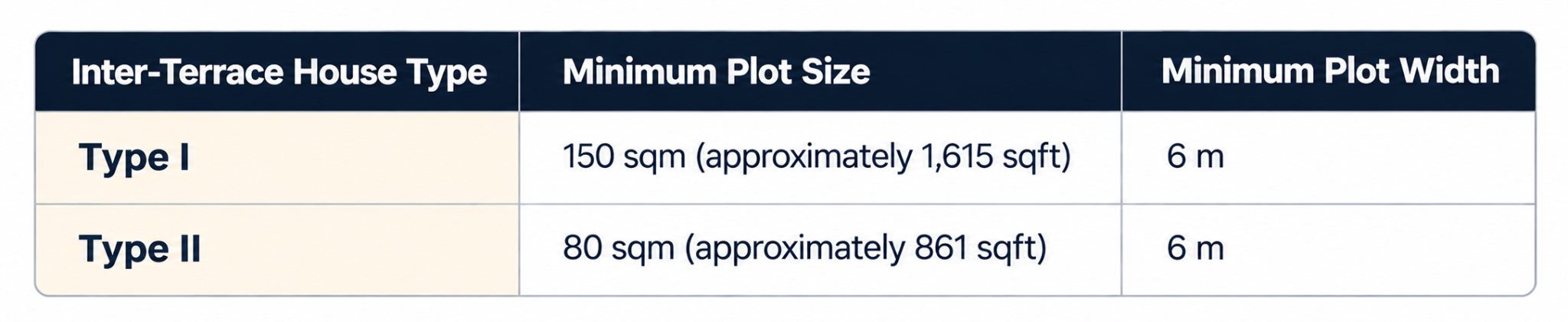
Source: URA, Information accurate as at 6 November 2026
2. Corner Terrace Houses
A corner terrace house sits at the end of a row of terrace houses, sharing a wall with its neighbour on only one side.
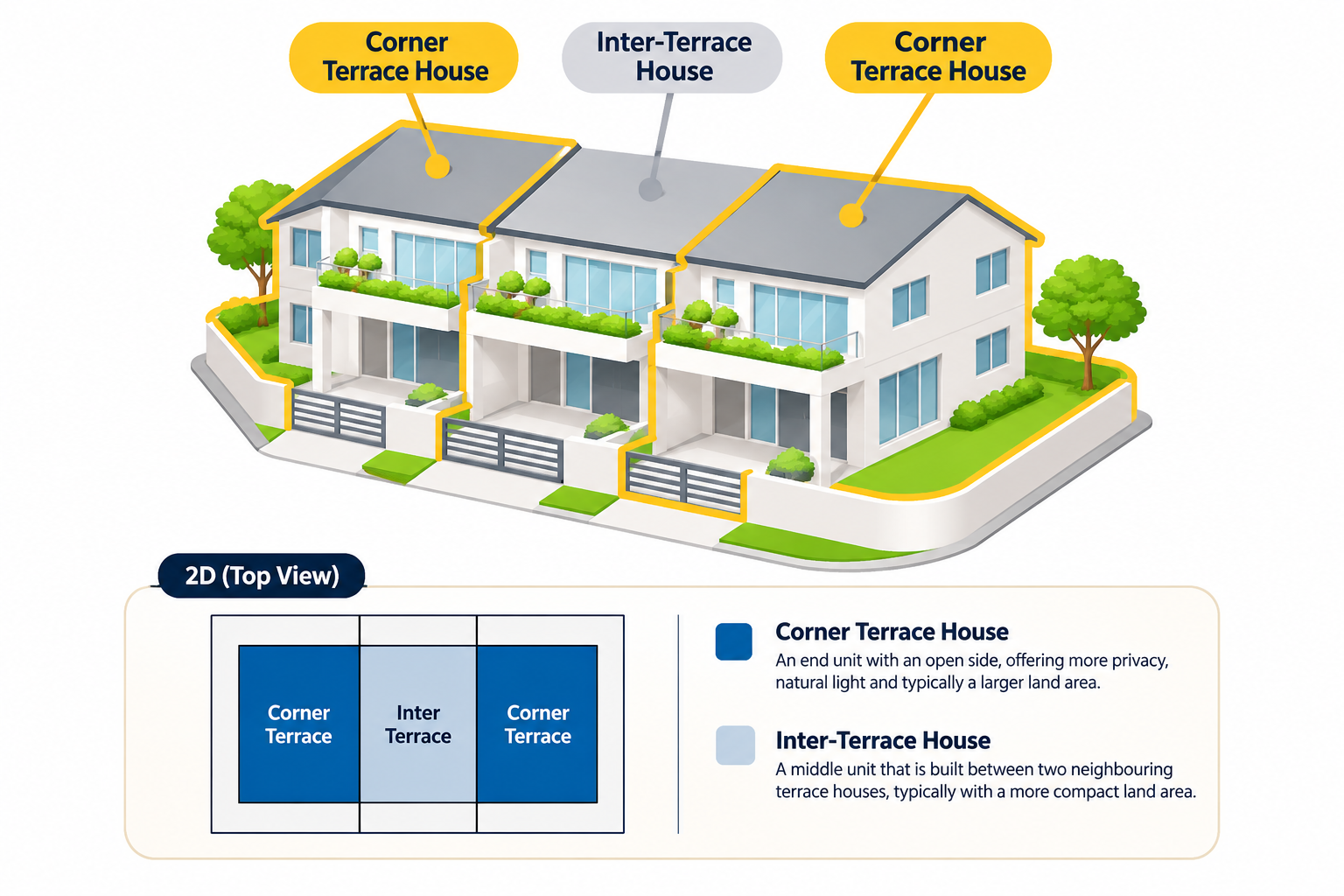
Alt Text: Illustration showing a corner-terrace house positioned beside neighbouring terrace houses in Singapore.
Similar to inter-terrace houses, corner terrace houses are also classified into Terrace Type I and Type II under URA's planning guidelines.
URA Minimum Plot Requirements

Source: URA, Information accurate as at 6 November 2026
What Is the Difference Between Terrace Type I and Type II?
Under the Urban Redevelopment Authority's (URA) planning guidelines, terrace houses in Singapore are classified into Terrace Type I and Terrace Type II, with different minimum land size requirements.
The main difference is the minimum land area required, rather than the design or appearance of the house.
- Terrace Type I: Requires a minimum land area of 150 sqm (1,615 sqft) for inter-terrace houses and 200 sqm (2,153 sqft) for corner terrace houses.
- Terrace Type II: Allows a smaller minimum land area of 80 sqm (861 sqft) for both inter-terrace and corner terrace houses.
Both types have the same minimum plot width requirements: 6 metres for inter-terrace houses and 8 metres for corner terrace houses.
Importantly, homeowners cannot simply choose between Type I and Type II based on their preferred land size. The applicable classification depends on URA's planning controls for the specific location, and any redevelopment must comply with the relevant requirements.
3. Semi-Detached Houses
A semi-detached house, commonly known as a semi-D, forms one half of a pair of houses sharing a common party wall.
Semi-detached houses can be arranged side-to-side or back-to-back. They typically offer more privacy and outdoor space than intermediate terrace houses.
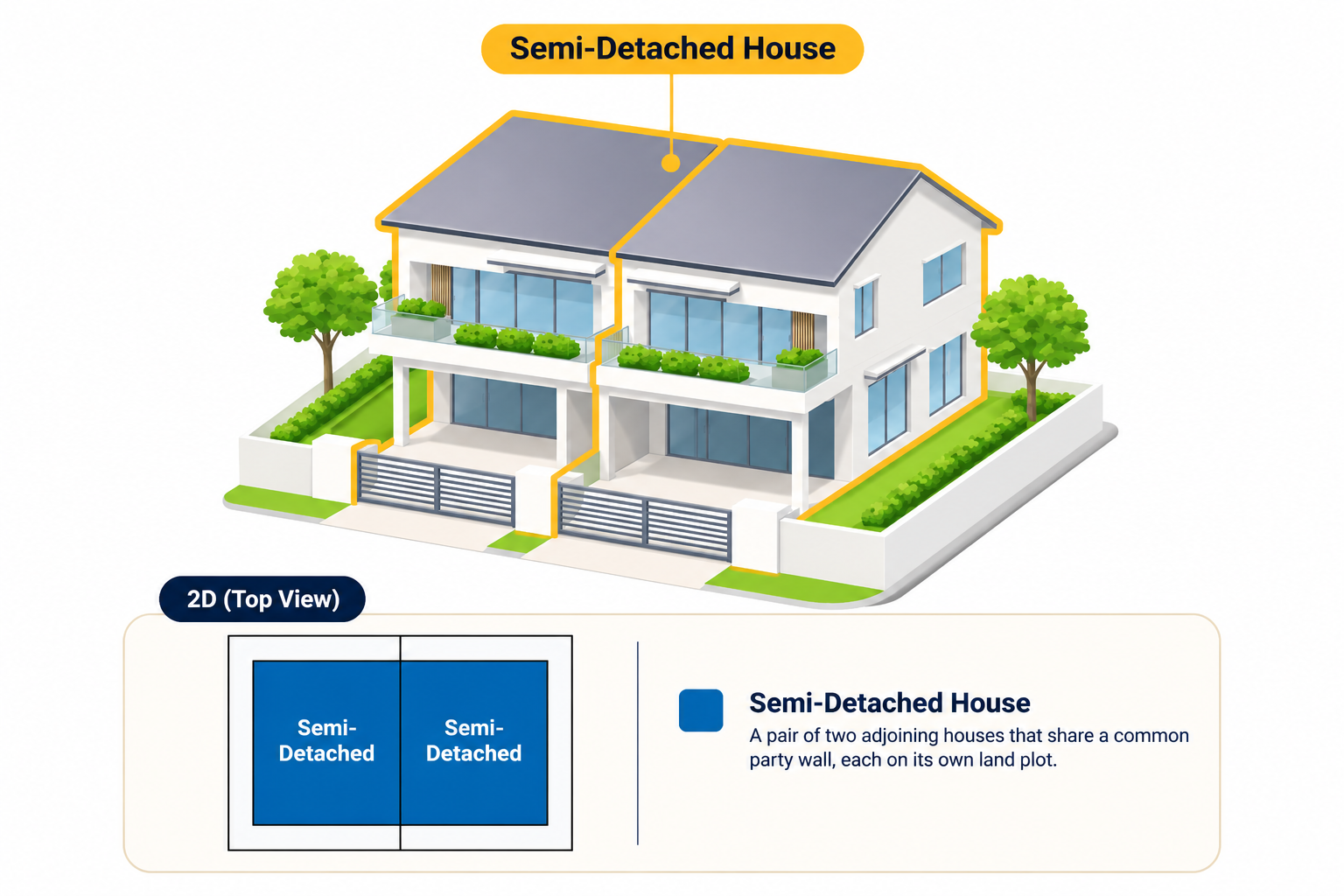
Alt Text: Illustration showing a pair of semi-detached house in Singapore.
URA Minimum Plot Requirements

Source: URA, Information accurate as at 6 November 2026
Side-to-Side vs Back-to-Back Semi-Detached Houses
In Singapore, semi-detached houses can be built in two configurations, depending on how the two homes are connected.
Side-to-Side Semi-Detached Houses
The most common configuration, where two houses sit next to each other and share a common wall along one side. Each house typically has its own frontage, entrance and outdoor space on the opposite side.
Back-to-Back Semi-Detached Houses
A less common configuration, where two houses are positioned with their rear walls joined together instead of their side walls. Each house faces a different direction, with separate entrances and outdoor spaces.
Under URA guidelines, both configurations require a minimum land area of 200 sqm (approximately 2,153 sqft) per house. However, the minimum plot width differs:
- Side-to-Side: 8 metres
- Back-to-Back: 10 metres
These requirements are subject to the applicable planning controls and URA approval.
4. Detached Houses / Bungalows and Good Class Bungalows (GCBs)
A detached house, also known as a bungalow, is a standalone residential building that does not share party walls with neighbouring properties.
Detached houses generally provide greater privacy, surrounding outdoor space and flexibility in home design.
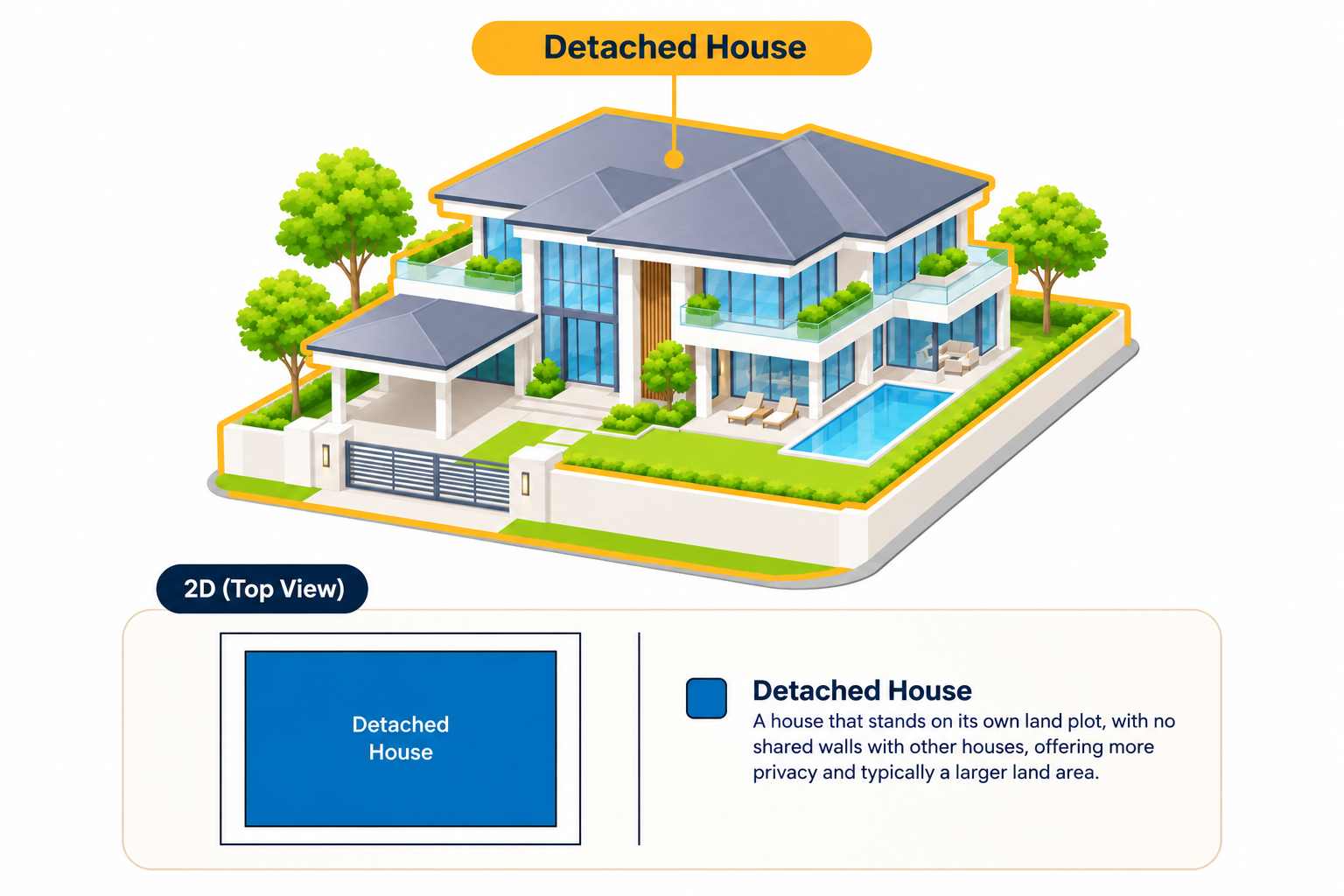
Alt Text: Illustration showing a detached house in Singapore.
URA Minimum Plot Requirements
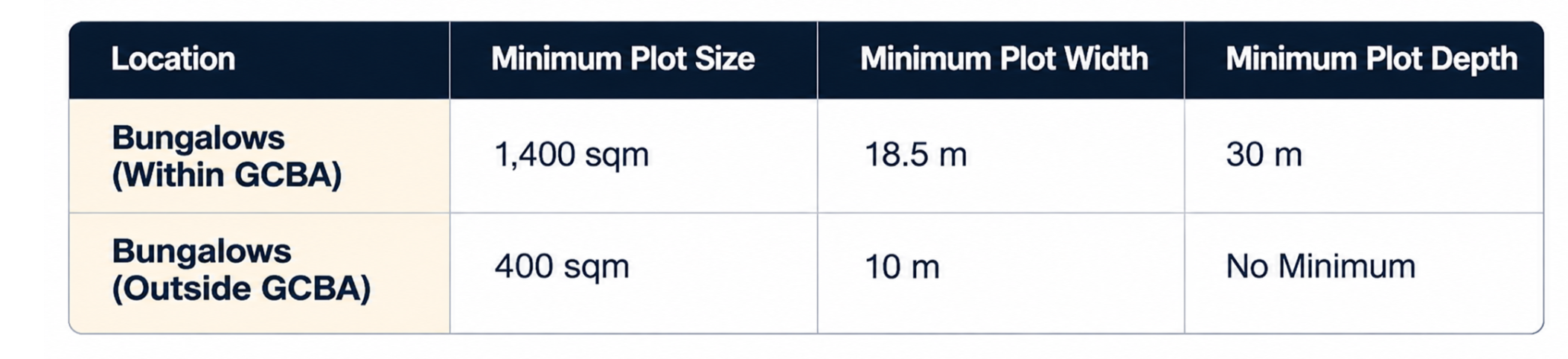
Source: URA, Information accurate as at 6 November 2026
Can Irregularly Shaped Land Qualify for Landed Housing?
Not all landed properties in Singapore sit on perfectly rectangular plots. Some have irregular boundaries, resulting in varying land widths across the site.
Under the Urban Redevelopment Authority's (URA) planning guidelines, slight deviations from the minimum plot width may be considered for irregularly shaped plots within existing landed housing estates, provided certain conditions are met.
Minimum Average Plot Width by Property Type
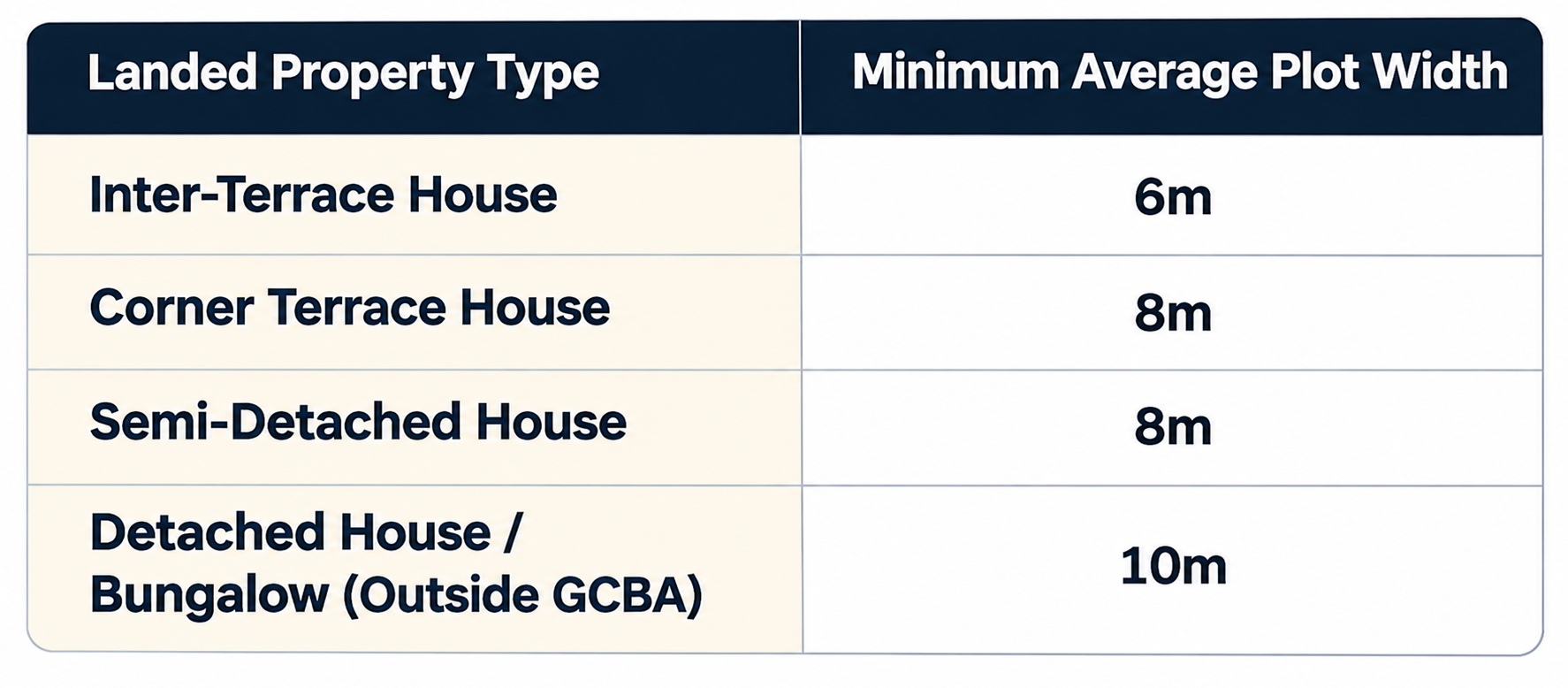
Other Requirements for Irregular Plots
In addition to meeting the minimum average width, the following conditions apply:
- Minimum width at the narrowest point: At least 4m.
- Minimum land area: The plot must still satisfy the applicable minimum plot size requirement.
- Planning compliance: All other relevant development controls, including building setbacks and road buffers, must be met.
- Residual plot restriction: Where a width shortfall is permitted, it is generally limited to one residual plot within a development. All other plots must meet the standard minimum width requirements.
What Does This Mean for Landed Property Owners?
An irregular land shape does not automatically prevent a property from qualifying for redevelopment.
Even if part of the plot falls below the standard minimum width, it may still be considered if its average width and other planning requirements are satisfied.
However, meeting these conditions does not guarantee approval. Each property's redevelopment potential remains subject to its specific site characteristics, applicable planning controls and the relevant authorities' assessment.
Does Landed Property Type Affect Its Market Value?
While the classification of a landed property can influence its market value, the property's underlying land characteristics, location and redevelopment potential are equally important considerations.
Several factors contribute to how a landed property is valued:
- Land Tenure: Whether the property is freehold, 999-year leasehold or shorter leasehold, including its remaining lease.
- Land Size and Shape: Total land area, plot shape, frontage, depth, facing, orientation and how efficiently the land can be used.
- Property Type: Whether the property is an inter-terrace, corner terrace, semi-detached or detached house.
- Building Condition: Whether the house is in its original condition, renovated, reconstructed or newly built, including its age and maintenance.
- URA Master Plan and Zoning: Planning restrictions under the URA Master Plan, including areas designated for bungalows, semi-detached houses or mixed landed housing, which can affect redevelopment possibilities.
- Building Height Restrictions: Whether the property is subject to a maximum building height of 12m or 15.5m, or other applicable height controls, which can affect rebuilding plans.
- Redevelopment Potential: Whether the land can accommodate a larger house, a different landed property type or subdivision, subject to URA guidelines and relevant approvals.
- Parking Conditions: Availability of on-site parking, the number of cars the property can accommodate and surrounding street parking restrictions.
- Location and Amenities: Proximity to MRT stations, schools, shopping malls, parks and other everyday conveniences.
- Nearby Religious Buildings: Proximity to mosques, churches, temples and other places of worship, including possible effects on traffic, parking and noise during peak periods.
- Feng Shui Considerations: Property facing, orientation, layout, surrounding roads and other features that may influence buyers with specific feng shui preferences.
- Neighbouring Properties: The condition, upkeep, height and appearance of neighbouring houses, as well as their proximity and potential impact on privacy, natural light and ventilation.
- Buyer Demand: Whether the property appeals to families looking for a home, buyers planning to rebuild or developers seeking land for redevelopment.
For instance, a well-located corner terrace with favourable land characteristics may offer greater redevelopment flexibility than a larger semi-detached house with an irregular plot.
Ultimately, a landed property's value extends beyond its classification. Understanding how its physical characteristics, planning restrictions and redevelopment possibilities interact provides a more meaningful assessment of its market value and long-term potential.
Beyond property classification, location and land tenure can significantly influence pricing. For a closer look at how these factors vary across Singapore, explore our analysis of landed property prices by district.
Unlock Your Landed Property's Potential with PropertyGiant
Every landed property holds different possibilities. The key is connecting it with the right buyer.
At PropertyGiant, our landed property expertise, market insights and network of over 300 developers allow us to connect homeowners with both genuine homebuyers and developers seeking their next redevelopment opportunity.
From inter-terraces and corner terraces to semi-detached houses, bungalows and vacant land, we identify the right audience to unlock your property's market potential.
Thinking of selling your landed property? Connect with PropertyGiant and discover who your next buyer could be.
Disclaimer
This article is provided for general informational purposes only and is based on URA's published development control guidelines. The minimum plot sizes, widths and depths stated are general requirements for the relevant development categories and may not apply uniformly to all existing properties. Planning controls, site conditions and regulatory requirements may change. Property owners and buyers should conduct independent due diligence and consult URA and qualified professionals before making decisions relating to property purchases, redevelopment, subdivision or land use.
Frequently Asked Questions (FAQs)
What are the different types of landed properties in Singapore?
The main types include inter-terrace houses, corner terrace houses, semi-detached houses and detached houses or bungalows. Good Class Bungalows are subject to additional planning requirements within designated Good Class Bungalow Areas.
What is the difference between Terrace Type I and Type II?
The main difference is the minimum plot size requirement. For example, an inter-terrace Type I requires at least 150 sqm, compared with 80 sqm for Type II. The applicable category depends on the site's planning controls.
What is the minimum land size for a semi-detached house in Singapore?
The minimum plot size is 200 sqm. The minimum width is 8m for side-to-side arrangements and 10m for back-to-back arrangements.
Can a landed property be rebuilt into a different property type?
A change in housing type may be possible, depending on the property's land dimensions, applicable planning controls and relevant authority approvals. Existing property classification alone does not determine redevelopment eligibility.