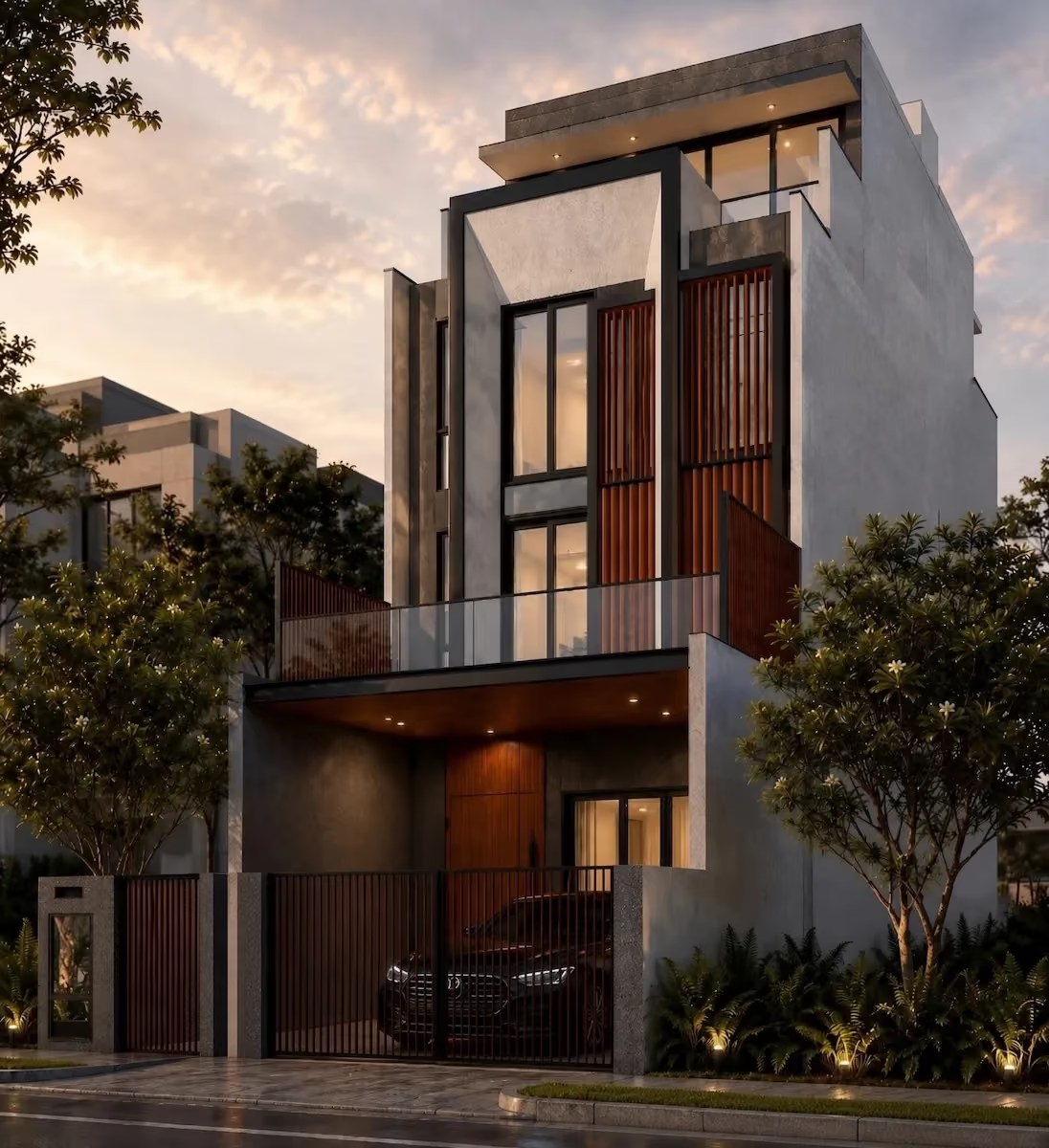

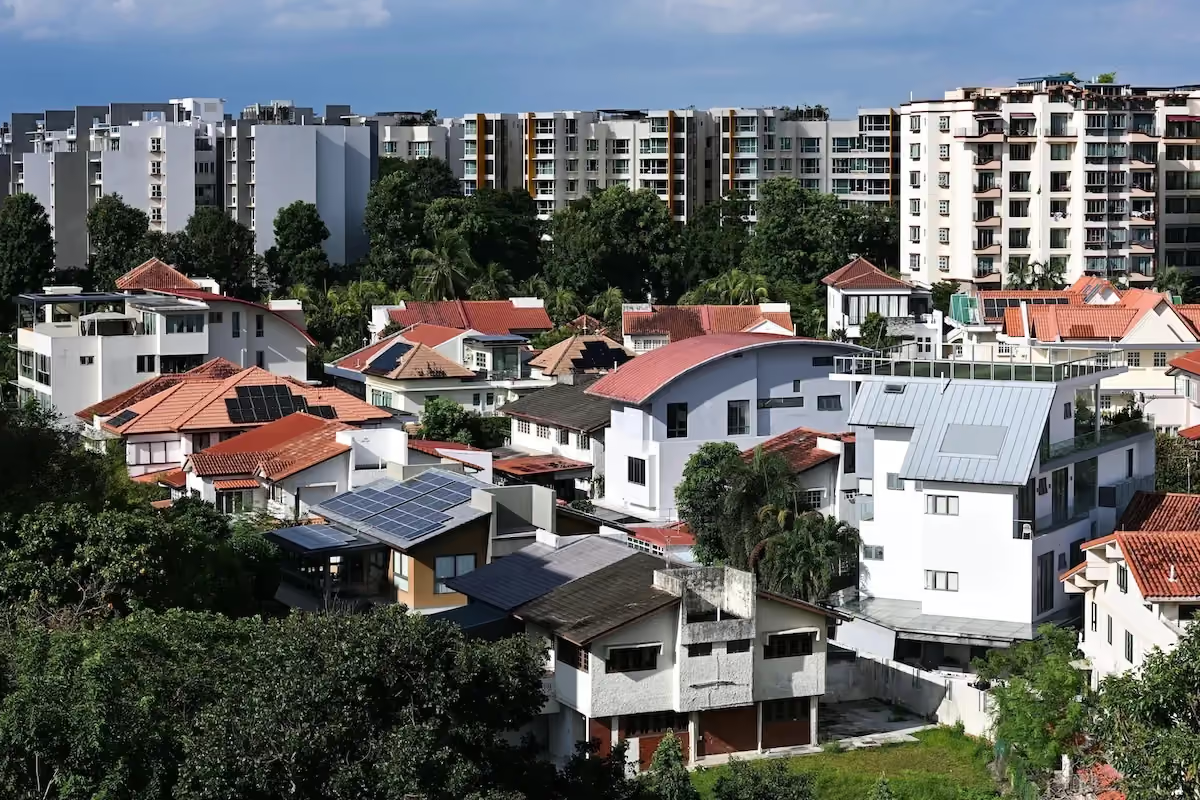
For many Singaporean homeowners, buying an old landed property comes with a common ambition: tear it down and rebuild a massive, multi-story “mega-home” that maxes out the permissible Gross Floor Area (GFA).
While maximising your plot ratio sounds logical on paper, the real-world economics tell a different story. Data and market analysis published by The Business Times suggest that building a smaller, well-designed home is often the financially superior and more practical choice.
Here is why “building big” might be a mistake and why “building smart” yields better returns.
1. The Per-Square-Foot (PSF) Illusion
A primary argument for maxing out GFA is that a larger building lowers your cost per square foot of floor area. While the math is true, the total quantum outlay tells a vastly different story.
Consider this case study from The Business Times featuring a 1,700 sq ft freehold intermediate terrace plot purchased for S$3.4 million:

The Reality Check
Option A gives you a lower PSF of floor area, but it requires S$900,000 more in cash or loans. If you opt for Option B, you instantly save close to a million dollars in capital expenditure. That S$900,000 can be redirected into high-yield investments that generate actual cash flow, something an oversized, owner-occupied home cannot do.
2. Diminishing Returns on Capital Expenditure (CapEx)
As construction costs rise due to global energy crises and material shortages, sinking S$3 million or more into a massive semi-detached or terrace rebuild presents a major exit risk.
When you eventually sell the property:
- Future buyers may not value your specific layout or lifestyle choices.
- Buyers are rarely willing to reimburse you dollar-for-dollar for your bespoke, premium construction costs.
- An oversized house narrows your pool of potential buyers to those who can afford massive upkeep.
3. The Ongoing Burden of Recurrent Costs
A larger home does not just cost more to build; it costs significantly more to hold.
Maintenance & Upkeep
Massive square footage, private lifts, and sprawling roofs require heavy, ongoing financial commitment.
Progressive Property Taxes
In Singapore, property tax is calculated using a progressive scale based on the Annual Value (AV) of the property. Transforming a modest old house into a luxury mega-home drives up its estimated market rental value (AV), pushing you into a significantly higher tax bracket, with rates scaling up to 32%.
4. Shrinking Household Sizes
According to official data tracked in recent years, the average household size for Singapore resident landed properties dropped from 4.3 persons in 2015 to 4.13 persons in 2025.
Multi-generational households are declining as adult children move out into their own homes. Building a 7-bedroom mansion for a family of four results in under-utilised space, echoes in empty corridors, and unnecessary mobility challenges as the owners age.
PropertyGiant SG Verdict
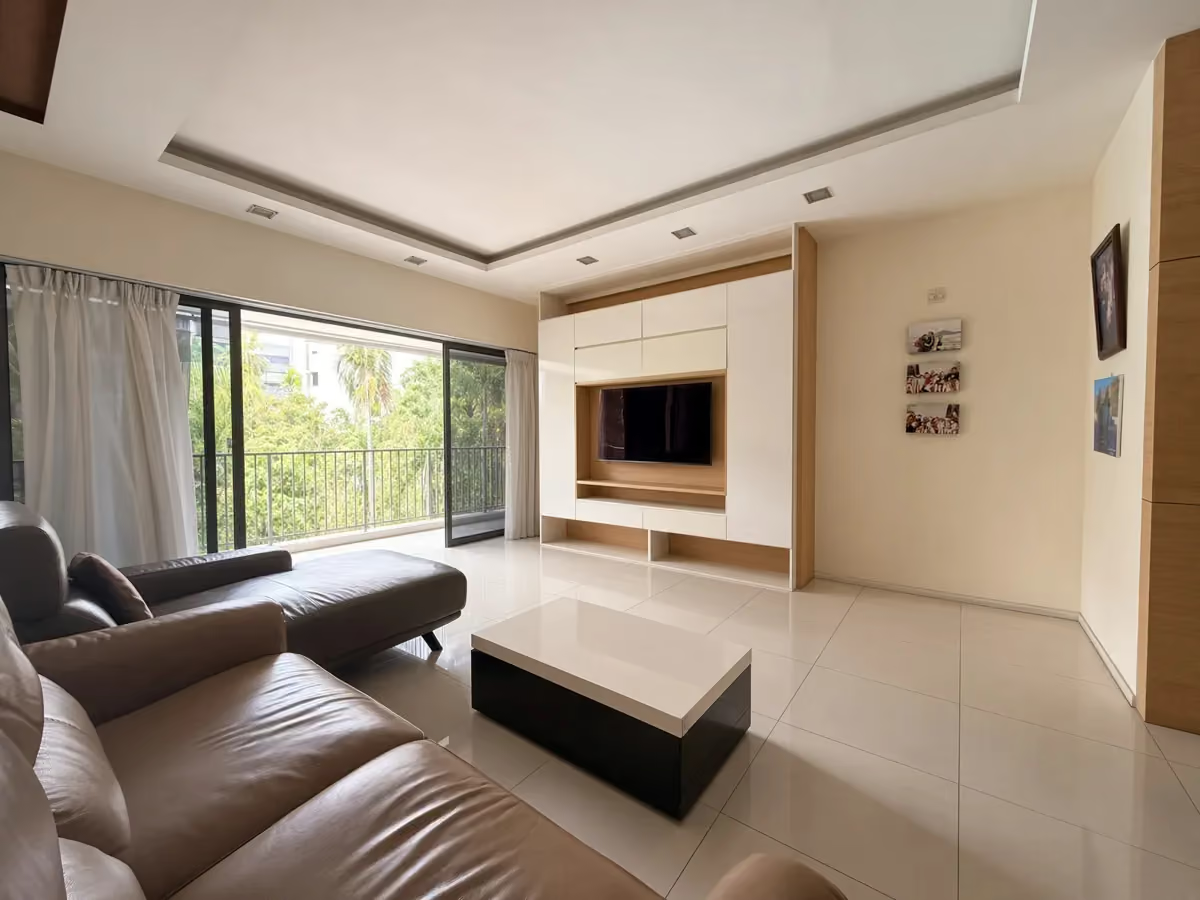
You do not need to max out your GFA to achieve luxury. Taking inspiration from modern premium condominiums, smart layouts and thoughtful architecture can make a 3,000 sqft home feel incredibly spacious, cozy, and highly functional without the bloated price tag.
Building a smaller, optimised landed home allows you to:
- Save substantial upfront capital.
- Minimise your recurring tax and maintenance liabilities.
- Protect your resale liquidity by keeping the total quantum affordable for future buyers.
Before you build to the absolute limit, consult with our team to evaluate the true financial returns of your landed property design.
Quick FAQ
Is it always better to maximise GFA when rebuilding a landed property in Singapore?
No. While maximizing Gross Floor Area (GFA) lowers the cost per square foot (PSF) of floor area, it substantially increases your total capital expenditure, future property taxes, and maintenance costs. Building a smaller, well-designed home frequently yields better financial returns and lifestyle utility.
How does rebuilding a house affect property taxes in Singapore?
Property tax in Singapore is levied on a progressive scale based on the property’s Annual Value (AV). Rebuilding an old landed house into a much larger, luxurious structure increases its AV, which can sharply elevate your annual property tax bill.
What is the average household size in Singapore's landed estates?
As of 2025, the average household size in Singapore's private landed properties has shrunk to 4.13 persons. This declining trend means building excessively large houses often results in under-utilised, redundant space.